
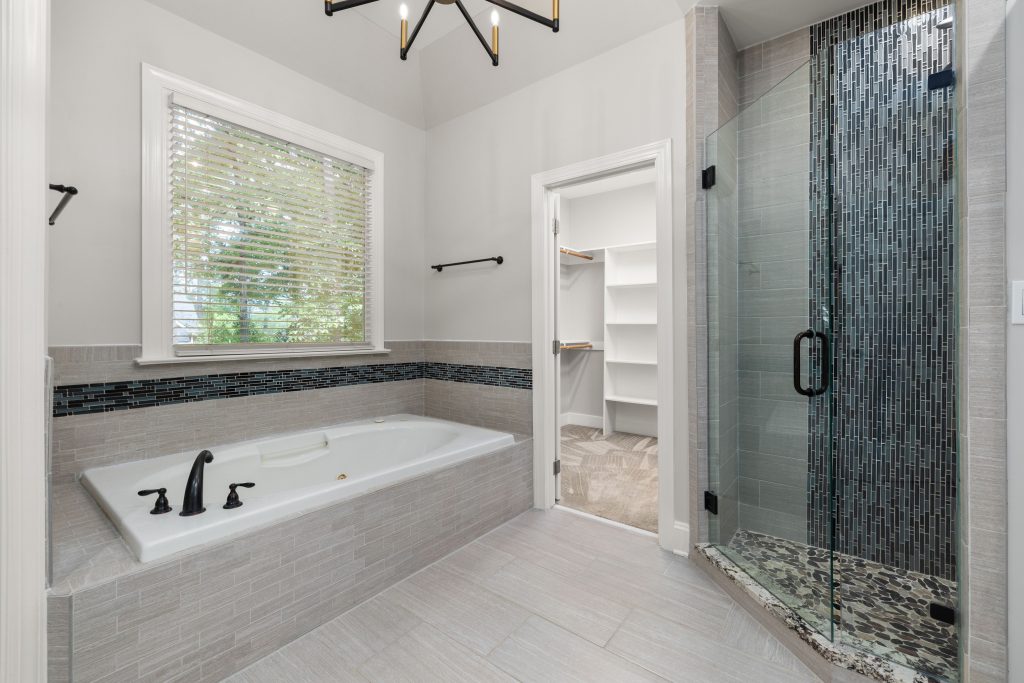
Choosing between a walk-in shower and a bathtub is one of the most important decisions homeowners face during a bathroom remodel. Both options can improve the appearance and functionality of your bathroom, but they serve different needs and lifestyles. A walk-in shower vs bathtub comparison should consider available space, accessibility, maintenance, household needs, and long-term plans rather than appearance alone. The right choice is the one that fits how you actually use your bathroom while supporting the overall design of your home.
Walk-In Shower vs Bathtub: What's the Difference?
A walk-in shower typically provides an open or enclosed bathing area that can be entered without stepping over the tall side of a traditional bathtub. Depending on the design, it can include a low threshold or a nearly level, barrier-free entrance.
A bathtub provides a deeper basin designed for bathing while seated or reclining. Some homeowners use tubs primarily for children, while others appreciate them as a place to relax.
Neither option is universally better. Your bathroom layout and personal priorities should determine which solution makes the most sense.
Advantages of a Walk-In Shower
Walk-in showers have become increasingly popular in modern bathroom renovations because they can provide an open, streamlined appearance while making daily bathing more convenient.
Easier Accessibility
One of the biggest advantages of a walk-in shower is accessibility. Eliminating or reducing the step into the bathing area can make it easier to enter and exit.
The National Kitchen & Bath Association emphasizes accessibility and universal design in its current bathroom planning guidelines. Its recommendations address how bathrooms can be designed for people with different physical abilities and changing needs throughout life.
Features that can improve accessibility include:
- Low or zero-threshold entry
- Built-in or fold-down seating
- Handheld showerheads
- Strategically positioned grab bars
- Slip-resistant flooring
- Easy-to-reach controls
- Wide shower entrances
These features can be useful for homeowners who want a bathroom that remains comfortable as their needs change.
Better Use of Space
A well-designed shower can make a bathroom feel more open, particularly when paired with clear glass doors. Removing a bulky tub can also create room for a larger shower enclosure or additional storage.
NKBA research has identified larger showers as a major bathroom design trend. In one NKBA design trends report, 77% of respondents said removing tubs to create larger showers would be popular over the following three years.
Easier Daily Maintenance
For homeowners who rarely take baths, a walk-in shower can be a more practical use of bathroom space. Modern shower systems can also be designed with large-format tile, recessed niches, frameless glass, and fewer difficult-to-clean surfaces.
However, maintenance depends heavily on the materials and construction. Glass still needs regular cleaning, and improperly installed tile or grout can create maintenance and moisture problems.
Advantages of a Bathtub
Although walk-in showers are popular, bathtubs still offer important benefits.
Ideal for Families With Young Children
A bathtub can make bathing young children significantly easier. Parents may also appreciate having a tub available for children who are not yet comfortable using a shower.
If your home has multiple bathrooms, keeping at least one bathtub can provide useful flexibility for family members and future buyers.
A Relaxing Bathing Experience
Some homeowners simply prefer soaking in a tub. Freestanding, soaking, and other specialty tubs can become a focal point in a primary bathroom while creating a spa-like atmosphere.
A bathtub can also offer features that a standard shower cannot replicate, such as deep soaking and comfortable reclining.
Potential Resale Considerations
Removing a bathtub is not automatically a problem for resale. What matters is the overall configuration of the home and what buyers in your market expect.
In a 2025 report discussing bathroom remodeling, the National Association of REALTORS® noted that 32% of remodelers upgraded the bathtub in owner-suite renovations, while 27% removed the bathtub and another 27% reported that there was no bathtub. This suggests there is no single approach that dominates every bathroom renovation.
If your home has multiple bathrooms, removing the tub from the primary bathroom may be less concerning if another bathroom retains one.
Walk-In Shower vs Bathtub: Which Is More Accessible?
For many homeowners, accessibility can be the deciding factor.
A conventional bathtub requires stepping over the tub wall to enter and exit. That movement can become increasingly difficult for people with limited mobility.
A properly designed walk-in shower can minimize this barrier. Zero-threshold entries, seating, grab bars, handheld showerheads, and slip-resistant surfaces can all contribute to a safer bathing environment.
NKBA has specifically highlighted zero-clearance shower entries, grab bars, handheld showerheads, and built-in seating as features homeowners are requesting when planning bathrooms for aging in place.
Safety should also be considered regardless of whether you choose a shower or tub. NKBA notes that bathroom injuries commonly involve slips, falls, and scalding, which makes thoughtful bathroom planning particularly important.
Which Option Costs More?
There is no universal answer because installation costs depend on the existing bathroom, materials, plumbing configuration, fixtures, and amount of remodeling involved.
A basic tub replacement may be relatively straightforward when the new fixture uses the existing plumbing. A custom walk-in shower with a new shower pan, waterproofing system, tile, glass enclosure, built-in niche, bench, and upgraded fixtures can become considerably more expensive.
Likewise, a high-end freestanding bathtub may require significant plumbing or floor modifications.
When comparing prices, look beyond the fixture itself. Ask whether the estimate includes:
- Demolition
- Plumbing changes
- Waterproofing
- Tile installation
- Fixtures
- Glass enclosure
- Electrical work
- Flooring
- Permits
- Labor
- Cleanup and disposal
A lower initial price does not necessarily represent better value if important components are excluded.
When Should You Choose a Walk-In Shower?
A walk-in shower may be the better choice if:
- You primarily take showers rather than baths.
- Accessibility is important.
- You want the bathroom to feel more open.
- You prefer a contemporary design.
- You want a larger bathing area.
- You are planning for aging in place.
- You want features such as a bench, handheld showerhead, or multiple shower controls.
A walk-in shower can also be particularly effective in smaller bathrooms where maximizing usable floor area is important.
When Should You Choose a Bathtub?
A bathtub may make more sense if:
- You regularly enjoy taking baths.
- You have young children.
- Your household needs both bathing options.
- Your bathroom has sufficient space.
- You want a soaking tub as a design feature.
- Your home does not have another bathtub.
If you are considering removing your only bathtub, think carefully about how that decision could affect future household needs and buyer expectations.
Can You Have Both?
If your bathroom has enough space and your budget allows it, installing both can provide the greatest flexibility.
A separate walk-in shower and bathtub can create a spa-like primary bathroom while allowing household members to choose the bathing method they prefer. The challenge is ensuring that both fixtures fit comfortably without making the room feel crowded.
Good bathroom design is not simply about fitting as many fixtures as possible. The layout should provide appropriate clearances, comfortable movement, practical storage, and easy access to each fixture.
The NKBA’s bathroom planning guidelines are designed specifically to help professionals create functional, safe, accessible, and code-conscious spaces.
What Should You Consider Before Removing a Bathtub?
Before replacing a tub with a walk-in shower, ask yourself a few important questions:
Is This Your Only Bathtub?
If you have another bathtub elsewhere in the home, removing the primary bathroom tub may have less impact on your household’s flexibility.
Who Will Use the Bathroom?
Think beyond your current needs. A bathroom renovation can last for many years, so consider children, guests, aging family members, and future accessibility requirements.
Does the Layout Support a Larger Shower?
A professional remodeler can evaluate the existing plumbing and floor plan to determine how much space can realistically be allocated to the shower.
Is the Waterproofing Being Done Correctly?
Waterproofing is one of the most important technical aspects of a shower installation. Attractive tile and glass cannot compensate for a poorly constructed waterproofing system.
Ready to Create Your Ideal Bathroom?
Choosing between a walk-in shower and bathtub is an important part of creating a bathroom that fits your everyday routine and long-term needs. The right solution can improve accessibility, maximize available space, and complement the overall style of your bathroom. Whether you prefer the convenience of a walk-in shower or the comfort of a bathtub, thoughtful planning can help you get the most from your renovation. An experienced remodeling professional can help you evaluate your space and select features that balance functionality, design, and budget.
Ready to transform your bathroom into a space that works for you? Contact Precision Kitchen and Bath to discuss your bathroom remodeling goals and explore the right shower or bathtub options for your home. Get started with a personalized remodeling plan designed around your space, lifestyle, and preferences.